How to get the most out of your coding agent
Ground your coding agent in source and evidence, give the work a coherent point of view, and keep the process proportionate to the request.
We started using AI for development with GPT-3, continued through ChatGPT, and now work with agents that can read a repository, change files, and check the result.
Our workflows grew alongside those capabilities. As more of the work moved to agents, the decisions we kept coming back to were similar across tasks: understand the request, research the existing solution, question the complexity, and verify what the customer receives.
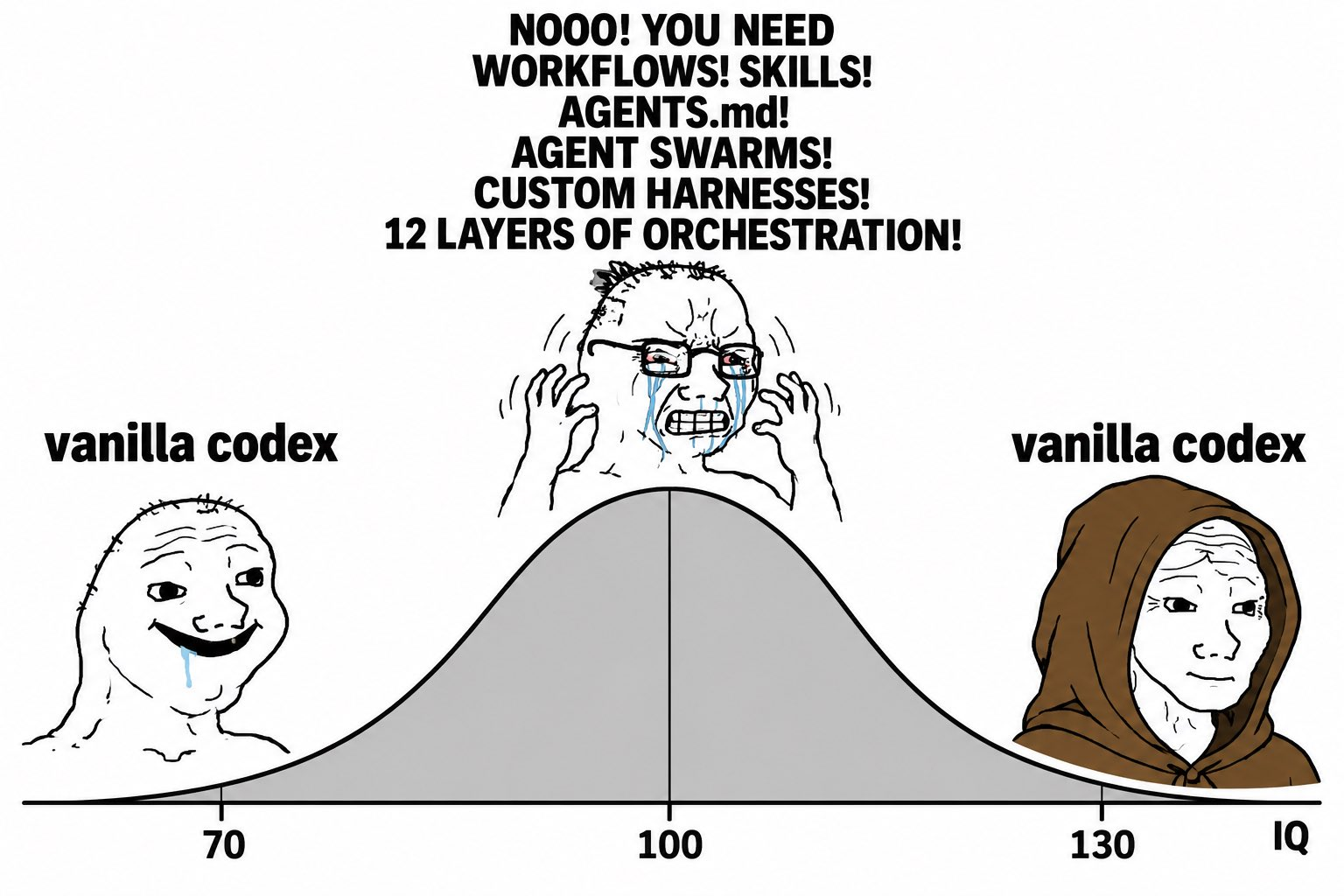
At CoreMVP, we use guidance to address three problems: an agent can make an assumption and report success without checking it; working software can have weak hierarchy or a generic voice; and a small request can grow into a much larger project. These are reasons to direct the work, not permanent limits on what agents can do.
We've kept a core of workflows and skills around those problems. The approach is useful across applications: ground decisions in the actual source, develop a point of view, and keep the effort tied to the request.
As agents improve, we want to remove guidance that no longer earns its place.
Four workflows and fifteen skills
We kept four engineering workflows:
- Proposal: research the existing application and maintained solutions, then define the requested behavior and what would count as finished.
- Challenge: independently question the plan and remove work the outcome doesn't need.
- Implementation: integrate the agreed change through the application and check the behavior people will use.
- AI Code Review: independently inspect the source and recorded evidence against that agreement, then recheck accepted corrections.
The fifteen canonical skills give that process its responsibilities and application context:
- Coordinate, produce and inspect:
lead-agent,code-agent,review-agentkeep scope and decisions with the main Lead, production and checks with Code, and independent read-only inspection with Review. - Choose the result:
developmentandproductconnect a request to a bounded delivery path and the behavior people need. - Work through the application:
frontend,backend,data,auth, andbillingguide changes through UI, API, persistence, permissions and paid access, where a local change can affect other behavior. - Check the real path:
local-developmentguides setup and checks of the actual application and the services a change depends on. - Give the product a point of view:
marketing,writing,seo, andtasteconnect audience, argument, voice, discoverability and contextual judgment to the work.
These are our selection, not a requirement for every application. Load the skills relevant to the task. A small edit doesn't need all fifteen, every role, or a new document for each phase.
We're preparing this guidance for our premium template. You bring your own AI tool, account and model access.
The package is repository guidance, workflow instructions and role configurations. We're preparing Code and Review role configurations for Codex and Claude Code; the Lead stays in your main conversation. Review reads without editing or executing tests.
Confident answers can be wrong
An agent can describe a plausible implementation and call it finished while a consequential path remains unchecked. A passing build tells you something useful, but it doesn't establish that the right person can access the feature, that data survives a reload, or that a provider accepted an action.
Define the expected behavior and important rejection cases. Proposal grounds the plan in current source, installed library versions and maintained first-party documentation.
Challenge questions whether the assumptions match that source and whether the proposed checks could pass while the outcome fails.
Implementation follows the change through its real owners; Code runs checks that can answer those questions. Claude Code's guidance recommends giving the agent a way to verify its work and asking it to show evidence.
Consider an illustrative paid analytics page. Seeing metrics in the browser is only part of the result. Check that:
- An unpaid user cannot retrieve the metrics through the endpoint.
- The metrics use only data the user is allowed to read.
- An empty result or failed request has useful behavior.
The relevant Auth, Billing and Data guidance directs attention to those owners. Choose checks that exercise those decisions; a mocked response cannot establish the real access boundary.
Review the delivered work
AI Code Review then inspects implemented source and Code's recorded evidence against the agreement. A fresh reviewer can question assumptions the producer carried through the task. Claude Code recommends fresh-context review.
Reviews can miss things too. Another model's approval is a judgment about the material it saw; it is not evidence that an untested path works. Keep important gaps visible so you can decide what still needs checking.
Working software can feel generic
That analytics page could return correct numbers while giving every card equal weight, using labels its audience doesn't understand, and sounding like a generic dashboard. Functional checks won't tell you whether its composition, language and character fit the people using it.
Choose the guidance the task needs. Product asks which decision the page should help someone make; Frontend shapes its hierarchy and interaction.
For a public explanation, Marketing looks at the audience's situation, Writing shapes the argument and voice, and SEO applies where there is an actual search intent.
Study relevant references
Taste asks how the choices work together, including beauty, humor, restraint, surprise and personality. Study relevant interfaces or writing, inspect what their choices do, and identify decisions to adapt for your audience.
A serious planning tool and a playful hobby app can need different choices even when their screens contain similar data.
For the analytics page, that might mean giving the decisive metric room, moving supporting detail out of its way, and choosing language that fits the product. Inspect the actual page and copy. A checklist can direct attention, but the people making the product still need to judge the result and listen to how others respond.
Retain relevant feedback
Meaningful feedback is a reason to apply Taste without a separate learning request.
If you reject a jokey empty state because it interrupts a serious task, the Lead can retain that response with the artifact and context. Code keeps the scoped lesson in the project.
Before a later relevant task, retrieve it and check its limits. Restraint in that empty state needn't rule out warmth in onboarding.
New feedback can revise or remove the lesson. This records judgment for later use; it doesn't train the model or guarantee good taste.
Small requests can spiral
A request for one more filter can lead to a new query abstraction, a component rewrite and a migration to a different library. Each addition may be reasonable on its own while taking the work away from the original need.
Use Proposal to inspect what already exists and research proven solutions before designing another one. Challenge assesses the plan: which requirements are necessary, what can be deleted, and what can be reused?
The Lead keeps the requested outcome and scope decisions in view. Useful discoveries can inform a later task without becoming requirements for this one.
Keep the process proportionate
The same restraint applies to the agent process. A typo rarely needs several roles, a lengthy proposal and repeated review rounds.
Anthropic recommends the simplest sufficient approach and describes the latency and cost tradeoffs of agentic systems. We apply that question to our guidance: what does this extra step contribute to the actual result? Claude Code's review guidance also warns that chasing every suggested finding can over-engineer the work.
For each instruction or review step you keep, name the failure or decision it helps with. If the agent now handles that work reliably without the reminder, try removing it and inspect the next relevant result.
Keep application boundaries and meaningful product judgment available where they affect the task. Add guidance back when a concrete failure justifies it, rather than keeping every rule because it once seemed useful.
Start with the Development guide for a feature, fix, or interface improvement. Use the Marketing guide when the next outcome is helping customers understand what you've built.
I'm Antoine. I build CoreMVP and write about the problems I run into, the decisions I make, and what I learn along the way.